A comprehensive look at Aluminum Foundry and its role on casting success
Wiki Article
A Comprehensive Guide to the Production Techniques Employed in an Aluminum Foundry
The manufacturing techniques employed in aluminum foundries are essential and varied to the industry. Each technique, from sand spreading to additive production, offers special advantages tailored to particular production demands. Recognizing these strategies can considerably affect product quality and performance. As the need for innovative manufacturing continues to grow, the value of understanding these techniques can not be overstated. What effects do these improvements hold for the future of aluminum production?Understanding Aluminum Alloys and Their Feature
Aluminum alloys play a crucial duty in the production procedure because of their varied residential properties and applications. These alloys are mostly classified right into two groups: wrought and cast alloys, each with unique characteristics. Wrought alloys, such as the 6000 and 7000 collection, are understood for their outstanding strength-to-weight proportion and deterioration resistance, making them suitable for structural applications. In comparison, cast alloys, including the 2000 and 3000 series, exhibit superior fluidness and can be easily formed into intricate shapes.
The specific residential properties of light weight aluminum alloys, such as tensile stamina, ductility, and thermal conductivity, are affected by their chemical structure and handling methods. Components like magnesium, copper, and silicon are commonly included in boost these properties, customizing the alloys for particular uses in aerospace, auto, and building and construction markets. Comprehending these alloys and their behaviors is crucial for maximizing manufacturing procedures and guaranteeing high-quality results in light weight aluminum Foundry procedures.
Sand Spreading: A Standard Method for Light Weight Aluminum Manufacturing
Sand casting is an extensively used technique in aluminum manufacturing that involves creating a mold and mildew from sand to shape the metal. This approach offers several advantages, such as cost-effectiveness and the ability to produce complicated forms, while additionally presenting particular drawbacks, including surface coating constraints and slower production prices. Aluminum Foundry. Understanding both the process and its benefits and drawbacks is important for evaluating its viability in different applicationsProcess Introduction
One of the most long-lasting methods in metal casting, sand spreading uses a trustworthy method for producing light weight aluminum components. This process starts with creating a mold and mildew from a combination of sand and a binding representative, which is shaped to match the wanted part. Once the mold and mildew is prepared, molten light weight aluminum is poured into the cavity, enabling it to fill up the space and take on the mold and mildew's form. After cooling, the mold and mildew is broken away to expose the cast aluminum component. Any type of essential completing procedures, such as machining or surface treatment, can after that be used to accomplish the final requirements. Sand spreading is widely made use of as a result of its flexibility, making it possible for the manufacturing of complicated forms and differing sizes efficiently.Negative Aspects and benefits
The sand casting process presents an one-of-a-kind collection of advantages and disadvantages that influence its application in light weight aluminum manufacturing. One significant benefit is its convenience, enabling the production of complex sizes and shapes. Furthermore, sand spreading is cost-efficient for low to tool production quantities, needing minimal tooling. Nevertheless, it also has downsides, such as lower dimensional accuracy and surface area coating compared to advanced methods. The procedure can be labor-intensive, requiring proficient labor for mold preparation and putting. The manufacturing rate may be slower, limiting its efficiency for high-volume applications. Overall, while sand spreading remains a feasible choice for numerous aluminum parts, its restrictions must be considered in the context of details manufacturing requirements.Pass Away Spreading: Precision and Efficiency in Production
Die casting stands as a foundation of aluminum Foundry production, offering unequaled accuracy and effectiveness. This technique includes compeling liquified aluminum right into a steel mold and mildew under high stress, causing very accurate and constant components. The process permits intricate layouts and limited resistances, making it suitable for applications in automobile, aerospace, and durable goods.The performance of die casting is apparent in its quick manufacturing prices, which considerably lower lead times. Furthermore, the technique minimizes waste, as excess metal can be recycled. The sturdiness of die-cast elements enhances the durability of items, lowering the need for regular replacements.
Pass away spreading supports numerous surface area coatings and second procedures, including to its flexibility. This combination of speed, accuracy, and material preservation settings die casting as a favored option for suppliers seeking affordable services without giving up high quality. In the competitive landscape of light weight aluminum Foundry techniques, pass away casting stays an important strategy.
Financial Investment Casting: Getting Complex Geometries
Usually outweighed by die casting, investment spreading plays a substantial function in light weight aluminum Foundry production by allowing the creation of parts with great details and elaborate geometries. This method involves producing a wax pattern, which is coated in a ceramic shell. As soon as the covering sets, the wax is dissolved, leaving a dental caries that reflects the wanted shape of the end product.Investment spreading is especially advantageous for generating complex parts that might be impossible or difficult to attain with various other methods. The procedure enables for high dimensional accuracy and a smooth surface area finish, reducing the requirement for considerable machining. Additionally, it sustains a vast array of alloys, boosting its adaptability in producing applications. By making use of investment spreading, foundries can meet the demands of markets such as aerospace, automotive, and clinical, where accuracy and intricacy are paramount.
The Function of Additive Production in Aluminum Foundries
Additive production is significantly recognized for its transformative potential in light weight aluminum foundries, offering benefits such as lowered material waste and improved design flexibility. Numerous strategies, consisting of 3D printing and binder jetting, are being adopted to streamline manufacturing processes and boost effectiveness. As the market progresses, useful site future trends may even more incorporate additive production, improving standard Foundry methods.Advantages of Additive Production
As the manufacturing landscape develops, the combination of additive manufacturing in aluminum foundries offers a transformative shift in production abilities. This ingenious strategy offers several substantial advantages, including reduced material waste, as it permits for specific layering and marginal extra. Furthermore, additive manufacturing facilitates fast prototyping, making it possible for quicker iterations and adjustments during the style phase. This modern technology additionally sustains the production of complex geometries that traditional approaches may have a hard time to attain, boosting product performance and efficiency. It can streamline supply chains by making it possible for localized manufacturing, lowering transportation expenses and lead times. Ultimately, the adoption of additive production encourages light weight aluminum factories to enhance efficiency, enhance product top quality, and meet the expanding demand for modification in production.
Typical Techniques Made Use Of
Checking out the landscape of light weight aluminum factories reveals a selection of typical strategies that leverage additive manufacturing to improve production processes. One widespread method is the use of 3D printing for producing intricate molds, which enables detailed styles that typical approaches can not accomplish. This technique lowers product waste and reduces preparations significantly. In addition, binder jetting is used to create sand mold and mildews directly from digital versions, enhancing the manufacture procedure. An additional strategy involves the integration of steel additive production, which makes it possible for visit this website the manufacturing of highly personalized light weight aluminum elements. These strategies not only enhance performance however likewise add to innovation in style, enabling shops to fulfill varied consumer requirements while keeping top notch criteria.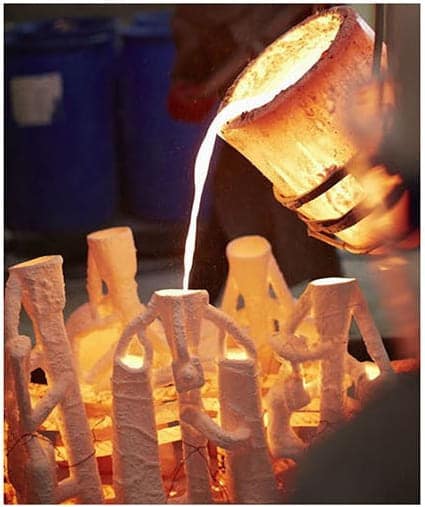
Future Trends in Industry
While the aluminum Foundry sector has typically relied upon conventional production methods, the integration of additive manufacturing is poised to redefine production standards. This innovative strategy enables the production of intricate geometries that are typically impossible to attain through conventional casting strategies. By making it possible for rapid prototyping and reducing product waste, additive manufacturing enhances effectiveness and sustainability within light weight aluminum foundries. In addition, this modern technology facilitates modification, enabling manufacturers to satisfy details customer requirements without comprehensive retooling. As the industry welcomes digitalization, innovations in 3D printing innovations will likely bring about quicker production cycles and decreased preparations. The future of light weight aluminum factories is significantly intertwined with the advantages and abilities supplied by additive manufacturing. Supplied High Quality Control Actions in Aluminum Foundries Quality control steps in aluminum shops are essential to assure the integrity and performance of cast products. These procedures consist of extensive evaluation procedures, which incorporate both aesthetic analyses and progressed testing methods such as X-ray radiography and ultrasonic testing. Checking crucial criteria, such as temperature level and alloy composition during the melting and pouring processes, is crucial to ensure the wanted product properties.Furthermore, adherence to standardized procedures, such as ISO accreditations, assists keep consistent top quality. Analytical process control (copyright) methods are commonly utilized to analyze manufacturing information, permitting the recognition of trends and possible flaws early in the manufacturing cycle.

Future Patterns and Technologies in Aluminum Casting Techniques
As the aluminum casting sector progresses, innovative methods are emerging to enhance effectiveness and item high quality. One notable trend is the assimilation of advanced automation and robotics, which enhance procedures and minimize labor costs. This change enables consistent accuracy in casting, lessening defects and boosting general outcome.In addition, the adoption of 3D printing technology for pattern-making is getting grip, enabling fast prototyping and the manufacturing of complicated geometries that typical methods battle to accomplish. In addition, using simulation software application promotes extra precise forecasts of material behavior during spreading, bring about maximized designs and reduced waste.
Sustainability is also a focal point, with initiatives toward recycling aluminum scrap and adopting environmentally friendly techniques in shops. These innovations reflect a dedication to advancing light weight aluminum casting techniques, ensuring enhanced performance, decreased environmental effect, and versatility to market needs. The future of light weight aluminum casting promises substantial developments that will improve the sector landscape.
Regularly Asked Concerns
What Safety And Security Actions Are Applied in Light Weight Aluminum Foundries?
Precaution in aluminum shops include individual protective equipment, air flow systems, routine safety training, emergency situation procedures, and checking for harmful materials (Aluminum Foundry). These techniques aim to decrease dangers associated with heats and possible chemical exposureHow Is Waste Managed in Light Weight Aluminum Casting Processes?
Waste management in light weight aluminum casting processes usually involves reusing scrap steel, using proper control for unsafe materials, and using effective purification systems. These methods reduce ecological impact and advertise source sustainability throughout the production cycle.What Ecological Regulations Influence Light Weight Aluminum Foundries?
Ecological regulations substantially affect light weight aluminum shops by applying standards on emissions, waste disposal, and power intake. Conformity guarantees lasting techniques, lowers ecological footprints, and promotes the accountable use sources throughout the aluminum production process.Exactly How Do Shops Deal With Equipment Upkeep and Fixes?
Foundries typically carry out scheduled upkeep programs, carrying out regular maintenances to assure tools operates efficiently. They may utilize specific technicians and use predictive maintenance technologies to lessen downtime and enhance overall operational efficiency.What Are the Regular Lead Times for Aluminum Casting Projects?
Normal preparation for aluminum spreading projects can vary considerably, usually varying from a couple of weeks to a number of months. Elements affecting these timelines include task complexity, material schedule, and the Foundry's present work and ability.Sand spreading is a widely used strategy in light weight aluminum production that entails developing a mold and mildew from sand to shape the metal. One of the most long-lasting techniques in metal spreading, sand casting provides a reliable method for generating aluminum elements. The sand casting procedure offers an unique set of benefits and disadvantages that affect its application in aluminum production. Often outweighed by die casting, financial investment spreading plays a substantial duty in aluminum Foundry production by enabling the creation of elements with elaborate geometries and great details. Waste administration in light weight aluminum spreading processes usually involves dig this recycling scrap steel, making use of correct containment for harmful materials, and employing reliable purification systems.
Report this wiki page